

Too Feminist

Someone recently told me she couldn’t work with me because I’m “too feminist.”
That she doesn’t align with the “toxicity of new-age feminism.”
That my posts are misandrist.
That I spew “man hate.”
And… I understand why.
The word feminism makes people flinch.
On the surface it’s been flattened. Weaponized. Turned into something loud, brittle, and reactionary.
But let me be clear about something.
This work I do is deeper and isn’t about division.
It’s about healing.
It’s not about hating men.
It’s not about superiority.
It’s about repair.
I am a survivor of silence.
Of rape.
Of violence.
Of monsters wearing masks.
Of the kind of masculinity that teaches girls to shrink, stay quiet, and smile through pain.
I grew up learning how easily power can be abused when it’s protected by silence.
I lived inside an industry that trained girls to measure their worth in inches and approval.
I learned early how often harm hides behind charm, authority, and the misuse of the phrase boys will be boys.
So… this isn’t a trend for me.
It isn’t a hashtag.
It isn’t borrowed language.
It’s a mission born from lived experience.
From the ashes of what once tried to break me.
When I wrote Monster Files, I didn’t set out to provoke.
I set out to name what so many girls learn to survive.
Because monsters aren’t always obvious.
They don’t arrive growling with horns and fangs.
They don’t always look like villains.
Sometimes they look like systems.
Sometimes they look like adults who should have known better.
The stories unsettled people, not because they were extreme, but because they were familiar.
Because naming harm disrupts the comfort of denial.
And denial is often mistaken for neutrality.
Shame only dies when we become unshamable and when stories are shared from the scar, not the wound.
I created the fEMPOWHER Foundation not as rebellion, but as reclamation.
To help girls rise before the world pulls them down.
To help them know their worth before they’re taught to doubt it.
To hand them a pen before they’re handed a script.
To give them safe places to write, speak, and be seen as whole.
To remind them they are more than their bodies, their trauma, or the limitations projected onto them.
In publishing, I help women reclaim their stories.
Not so they can be louder than men but rather so they can stop whispering in rooms they were born to speak in.
And the most important work I will ever do?
It isn’t public.
It isn’t performative.
It’s here. At home.
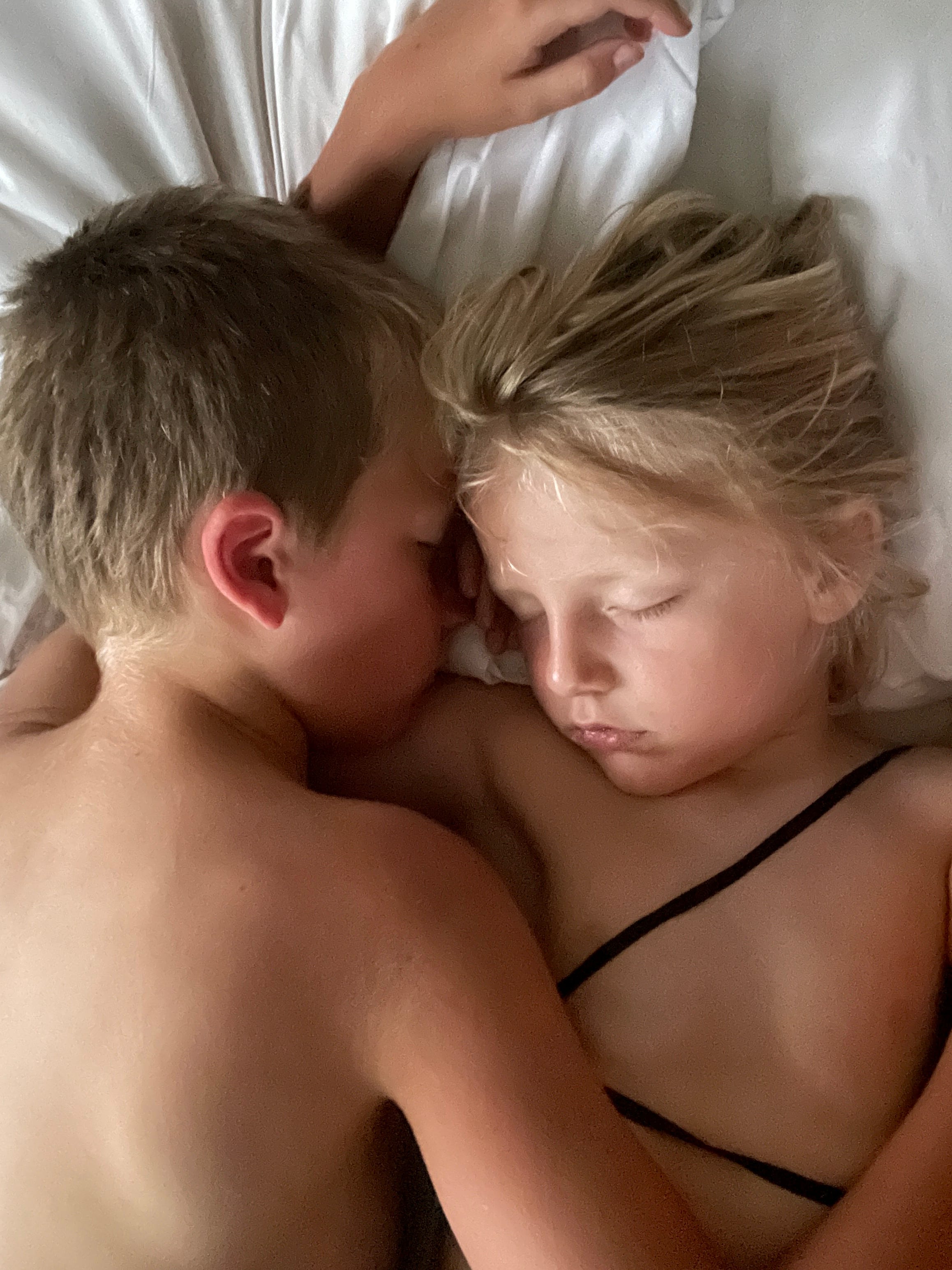
Raising three sons who will know that power shared is power multiplied.
That strength isn’t threatened by softness.
That equality isn’t a threat, it’s a truth.
That being an ally isn’t something you post about.
It’s who you are when no one is watching.
Being a boy mama is not a contradiction to my mission.
It is my mission.
Because what we raise in our homes, we release into the world.
And I want a world where girls are safe and boys are soft enough to care and strong enough to protect without dominating.
A world where girls rise with confidence and boys rise with compassion.
That’s not new-age feminism.
That’s legacy.
That’s humanity.
That’s love.
Because no one talks kindly about the soft boys.
The ones who cry at cartoons.
Who sing to themselves in quiet corners of classrooms.
Who play with their sister’s dolls before learning they’ve crossed an invisible line.
The ones who felt too much, too early, in a world already sharpening them.
There are no movies about them.
No archetypes.
No altars built to honor their sensitivity.
Instead, they are trained, subtly and relentlessly, to armour up.
To swallow tears before they harden into language.
To replace curiosity with competitiveness.
To make their voices louder than their feelings.
To confuse power with control, and emotion with shame.
This is where the damage begins.
Not with domination but with disconnection.
Boys are taught not to nurture.
Not to feel.
Not to trust their softness.
Not to linger with grief, tenderness, uncertainty, or need.
And when something essential is cut off, it doesn’t disappear.
It turns feral.
What we later call misogyny is often grief with nowhere to go.
What we call violence is often vulnerability denied.
What we call control is fear, cornered.
Because what is domination, if not terror of being undone?
What is aggression, if not intimacy rejected before it can reject you?
There is a forgotten femininity in men not to be mistaken with being effeminate, but about heart-level magnetism.
An inner parent.
A poet.
A healer.
A child who never stopped feeling but was never allowed to stay.
It is not women’s work to give this back to them.
But it is our work, as women, as mothers, as culture-makers, to stop letting it be stolen in the first place.
We see the consequences everywhere.
Men fluent in productivity but illiterate in pain.
Who mediate instead of mourn.
Who know the language of optimization but not the lexicon of grief.
Who say “I’m fine” with a jaw clenched so tight it could shatter glass.
This is the silence that masquerades as strength.
The tight-lipped smile.
The spiritual bypass.
The polished calm that looks like peace but is actually containment.
What we often praise as emotional mastery is, too often, emotional starvation.
This is where toxic positivity enters, not as a flaw, but as a coping strategy.
When boys are taught not to cry, then handed breathwork apps as adults.
When they are told to man up in childhood and to manifest their way out of pain later.
It’s the pendulum swing from repression to performance.
From silence to sugarcoating.
But shadow doesn’t dissolve in sunlight alone.
It displaces.
It leaks.
It erupts.
It lands somewhere.
Often on women.
On partners.
On children.
On anyone brave enough to mirror back what hasn’t been metabolized.
Silence is never neutral.
It is generational.
Which brings me back to feminism.
My feminism isn’t rage.
It’s repair.
It’s not against men.
It’s against the conditions that teach humans to abandon their own hearts.
It’s not superiority.
It’s wholeness.
When I speak, when I publish, when I build platforms for women and girls,
I am not declaring war.
I am doing repair work.
Repair looks like naming what happened.
Repair looks like accountability without annihilation.
Repair looks like raising sons who don’t inherit emotional illiteracy as masculinity.
This is not extremism.
It is evolution.
And evolution is rarely comfortable for what it outgrows.
But comfort was never the goal.
Safety was.
Wholeness was.
Truth was.
If that makes me “too feminist,”
what I really hear is:
too unwilling to stay silent.
too unwilling to minimize.
too unwilling to pass the wound forward.
And I’m okay with that.
Because I am not building a brand for your fucking comfort.
I am building a legacy for their future.
It occurred to me this afternoon as a truck with massive metal spikes pointing outward from the wheels drove by to imagine what the owner must be afraid of in radiating such an air and energy of extreme-feeling aggression. If he was the fully-embodied masculine raised not to defend, but rather protect from a place of inner strength, would he be expressing in the same way?
While, TBH, historically I have often reacted from a place of judgement, today I chose to feel compassion for what possibly created such a stance. I needed to soften, rather than hold a defensive stance myself.
It's in expressing positions such as you have that we each have an invitation to look at the elephant from another point of view. Thank you.